
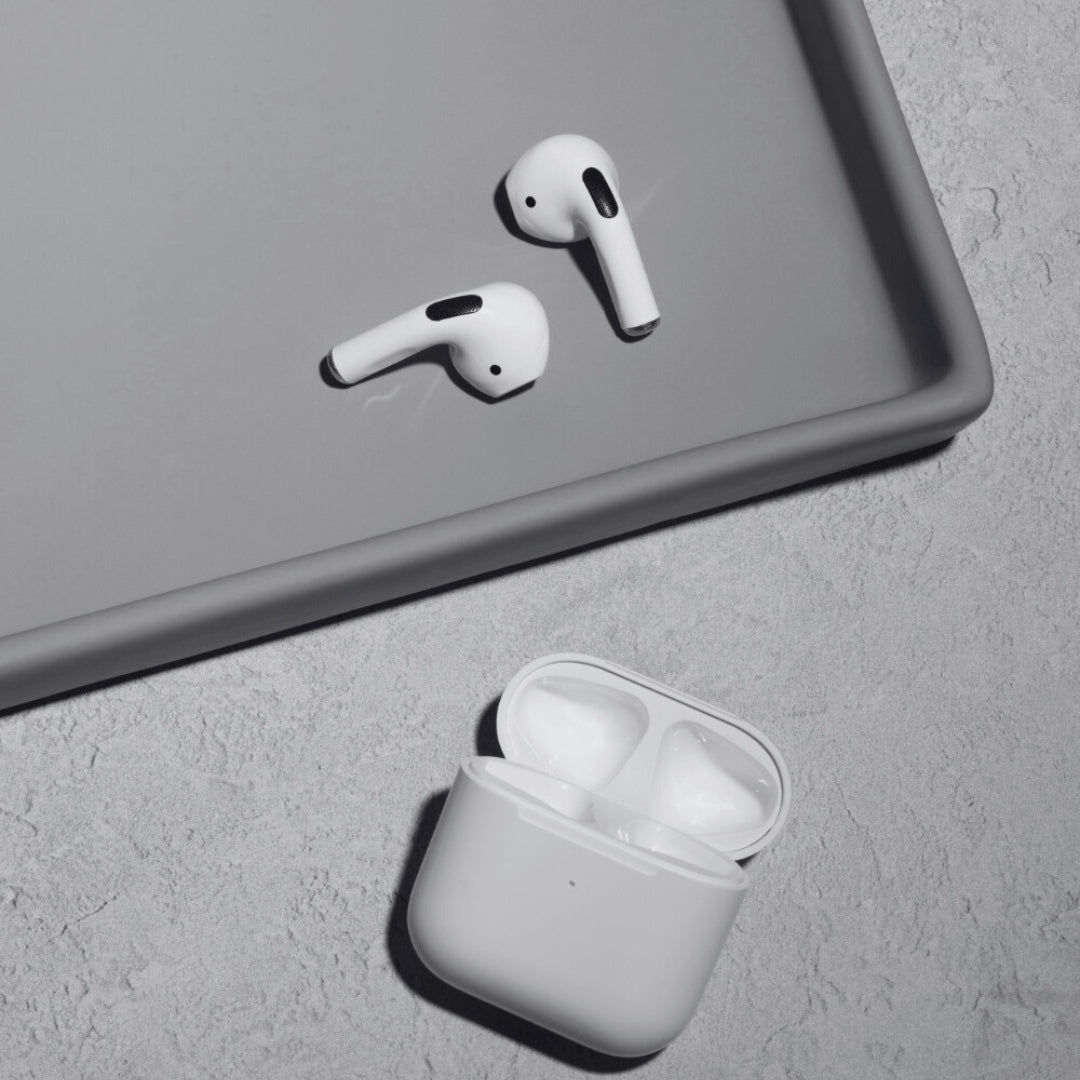


If your AirPods Pro 2 have already taken a "stroll" on the floor, you know the feeling: your heart leaps into your throat, the lid opens, and then you check the case for marks. The charging case itself is durable, but scratches and dings show up easily, especially on white. That's exactly where a silicone case comes in - low cost, great peace of mind in everyday use.
What a silicone AirPods Pro 2 case offers you in practice
Silicone is one of the most "honest" materials for earbud cases, because it solves everyday problems, not theoretical ones. First of all, it absorbs some of the shock from a fall and reduces the chances of your case getting obvious scratches. It doesn't make the case unbreakable - if it falls badly on a stone or from a great height, anything can happen - but for typical drops from a pocket or desk, it's the simplest shield.The second benefit is grip. The glossy plastic of the AirPods slips on some surfaces and "escapes" from a hasty hand. Silicone sits more stably, thus reducing the chances of it slipping out before it even hits the ground.
Third, it also protects aesthetically. If it bothers you that the case gets dull or picks up micro-scratches, a silicone case keeps the inner case looking new for much longer. It's the kind of protection that shows when you go to resell it or when you simply want it not to look "worn out."
Fit: 90% of the experience of a good case
For a silicone AirPods Pro 2 case, fit is paramount. If it doesn't "snap" properly, you'll know immediately: the lid might open with difficulty, have play, or not close with the same feel. Ideally, the case should fit snugly without forcing the opening, and not slip when you pick it up from the top.Also pay attention to the cut-outs: the opening for the charging port (USB-C on newer models, Lightning on other versions) must be properly centered, otherwise you'll struggle with cables that don't "go in" as they should. If you frequently use the pairing button, see if there's easy access or if it's overly covered.
And something many people forget: the point where the strap or carabiner attaches. If it's too thin or poorly designed, it can tear over time. That's not a reason to avoid the strap - it's a reason to choose better construction.
MagSafe, wireless charging and silicone: what applies
Here it's a case of "it depends." Many silicone cases allow wireless charging without issue, especially if they are thin. However, if you want to take advantage of MagSafe with a secure hold (to "stick" properly to the MagSafe pad), then it matters whether the case has a built-in magnetic ring or if it's thin enough not to weaken the magnet.In practice:
- If you primarily charge with a cable, you're fine with any good silicone.
- If you charge wirelessly occasionally, most will still cover you.
- If you rely on MagSafe daily, look for a case that clearly states compatibility or has a "tighter" magnetic behavior.
Strap and carabiner: salvation or hassle?
If your AirPods get lost easily in a bag, the carabiner is one of the most practical extras. You hang them on keys, on a backpack loop or on a gym bag and the search is over. It also helps if you move around a lot outside and don't want to keep taking them in and out of your pockets.On the other hand, if you prefer a minimal feel and can't stand anything rattling, it might bother you. The type of carabiner also plays a role here - metal ones are more durable, but make more noise, while some plastic ones are quieter but not always as reliable.
Problem with lint and dust: the "dark" side of silicone
Silicone is comfortable in the hand, but it has a classic drawback: it attracts lint from pockets and dust from bags. If you frequently wear jeans or carry your AirPods in a jacket pocket, you'll see it. That doesn't mean it's a bad choice - it just means it needs a quick clean.For daily care, a slightly damp cloth is sufficient. If stubborn lint accumulates, a small strip of tape (like those for clothes) does the job in seconds. Avoid strong cleaners as they can dull or alter the texture.
Yellowing: myth or reality?
With clear silicone and TPU, yellowing over time is more common. With colored silicones, the "problem" usually translates differently: they may appear shinier in the areas you constantly touch or retain marks from friction.If you care about it looking fresh for months, opt for darker shades or a matte finish. If you want a clear one to show off the original white, just expect that daily use leaves its mark - especially if your AirPods travel in pockets with coins, keys, or cosmetics.
How to choose the right case without spending hours searching
The choice becomes easier if you start with how you use them.If you're out all day and tossing them in a pocket or backpack, you want silicone with good grip and, ideally, a carabiner. If you work primarily in an office, you might care more about it being thin, not adding bulk, and the lid opening nicely.
Then comes charging. If you're used to resting the case on a wireless pad, choose a thin case that doesn't "cut" the distance. If you're a MagSafe user and want it to snap on securely, look for models that more clearly support it.
Finally, consider color as a tool. AirPods are easily lost in black bags. A vibrant color makes them stand out immediately. If you want a more "clean" look, black or dark blue better hide signs of wear.
Why many people change cases often (and that's OK)
A silicone case is one of the most affordable upgrades. Many treat it as a consumable accessory: they put it on for protection, use it normally, and when it starts to look tired, they change it without a second thought. That's the point - for the case to wear out, not the original case.If you want to shop quickly and without compatibility worries, at Phonebazaar.gr you'll find options for headphone cases with clear targeting for the model, Bazaar Deals type offers, and easy pickup options, such as BOX NOW 24/7 lockers.
Small details that make a big difference
There are two or three points that, when done right, make you realize you got a good case. The first is the lip around the lid: if it's too thick, it "eats up" the opening feel. If it's too thin, it might stretch out. The second is the inner surface - a higher quality silicone doesn't stick excessively to the case and doesn't leave strange marks.And third, the everyday feel in the hand. A matte silicone is usually more pleasant and doesn't slip, but it might attract a little more lint. A more "satin" surface is easier to clean, but might slip more. There's no perfect for everyone - there's what's right for your own use.
Whatever you choose, think of it this way: AirPods Pro 2 are one of those things you touch dozens of times a week. A good silicone case isn't just protection - it's a way to use them more comfortably, faster, and with less stress, every day you have them with you.